As underwater photography continues to evolve and become more accessible, the Divevolk SeaTouch 4 Max has emerged as one of the most talked-about underwater smartphone housings on the market. After spending several months diving with it in different conditions from tropical reefs, wrecks, low-visibility lagoons, and real macro diving, I decided to share an honest review and my thoughts about the housing from a user perspective. What follows is my complete experience, including what impressed me, what surprised me, and where I believe the device still has room to improve.
At its core, the SeaTouch 4 Max promises something that most underwater housings cannot offer: full control over your touchscreen underwater. This single feature changes the entire dynamic of smartphone diving photography and is the biggest reason why this housing stands out. This exact feature by the way, was actually the reason when I heard the first time of the housing. In the dive center back home are a lot technical divers, and those loved this housing because they could play games on the phone during their deco stops. So I decided, even skeptical, I want to try it by myself. From the moment I started using it with my “old” iPhone 13 for the first dives, the freedom of being able to navigate apps and adjust settings underwater made a noticeable difference in how I filmed and photographed. Quickly I trusted the quality of my new Divevolk housing, and I started to use it with my iPhone 15 Pro Max.

Housing Quality and Design
The first time I held the housing, I was pleasantly surprised by its solid structure. The SeaTouch 4 Max is designed using aluminum that feels durable without making the device heavy. Many smartphone housings tend to either feel overly bulky or worryingly light, but this one sits right in the middle. It feels robust enough to earn trust but not so heavy that you need to think about packing it into your luggage.
The latch system with two screws and the big O-ring seal contributes to a feeling of security. When you are placing an expensive smartphone inside a housing and submerging it 20, 30, or even 40 meters below the surface, confidence in the seal is everything. I particularly appreciate that the gel pad on the back is completely transparent, allowing me to carefully examine the tightness before every dive, when I submerge it in fresh water. To visualize this provides me personally more peace of mind than any technical specification or any vacuum system.

The housing is depth-rated up to 60 meters, although for typical recreational dive limits, 18 to 30 meters, it performs flawlessly. I personally brought it down to about 40 meters several times without experiencing any leaks, pressure issues, or distortion in the touchscreen function.
Touchscreen Functionality Underwater
This is where the SeaTouch 4 Max truly shines and separates itself from nearly every other smartphone housing on the market. Most competing housings rely on mechanical buttons and/or Bluetooth connection because they assume touchscreen surfaces cannot function underwater. Divevolk challenges that assumption with their patented pressure-transmitting screen.
In practice, it works surprisingly well.
Underwater, I was able to:
- unlock my phone
- change white balance
- switch between lenses
- adjust exposure
- open different camera apps
- review footage
- change frame rate or resolution
I even can reply to a quick message during a surface interval. Another interesting thought I had regarding safety; if something happens in the dive I would be able to call for help immediately on the surface (if there is a phone signal). The whole experience is impressively close to using the phone on land. The responsiveness remains consistent at depth, and I could still use it while wearing thin diving gloves. For divers using thick 7 mm or dry suit gloves there is a special finger-cot to operate, but they might notice some difficulty with precise touches, but for warm-water, the response is clear and predictable.


This level of control is invaluable. It gives you the freedom to film in the way your creative instincts demand and switch later on to your macro-mode and capture the smallest life, rather than being trapped in a single preset camera mode.
Ease of Use and Smartphone Compatibility
The SeaTouch 4 Max offers wide compatibility with different smartphone models. I used it with both an iPhone 13 and an iPhone 15 Pro Max, and both fit securely with the included phone trays. Adjusting the trays takes less than a minute, and once you find the right fit, the phone remains completely stable. The trays are available for the majority of smartphones on the market, if not, Divevolk will 3-D print it.
There is no Bluetooth connection, calibration procedure, or pairing required—a huge advantage. You simply place the phone inside, close the housing, check the seal, and you are ready to dive. Quick, simple, and headache-free, what I really appreciate.
Performance Underwater: Photos and Videos
Because the housing does not rely on optical add-on windows or lens distortions (unless you choose to attach an external wet lens for wide angle or macro), the image quality remains true to whatever your phone is capable of achieving. Using the housing, I was able to record beautiful 4K footage at 60 frames per second and even more stunning macro pictures with 12/ 48 MP. Even RAW format is possible. The stabilization remains impressive with most modern smartphones.
Color quality underwater depends on the conditions and of course, your phone. Without a red filter, the typical blue and green dominance appears at depth. However, using Divevolk’s red filter or adjusting white balance manually brings back the natural tones, especially between 5–15 meters where light still penetrates clearly. But there is also a wide range of accessories for the Divevolk, like light arms or a complete camera tray, so it is easy to attach video lights, especially for deeper dives.


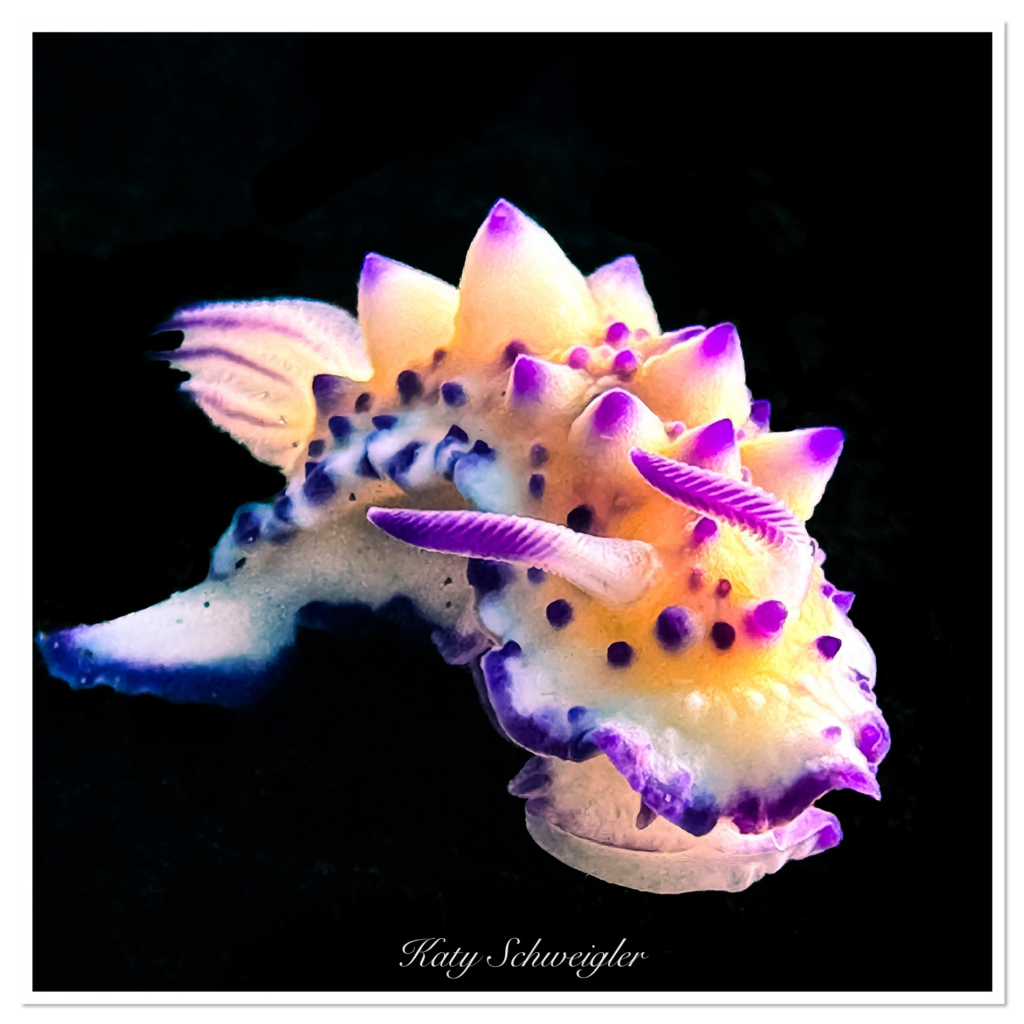
With the iPhone 15 Pro Max´s impressive sensor, I captured surprisingly crisp shots of small creatures such as cleaner shrimp and tiny nudibranchs. When using a video light, low-light shots inside wrecks or under overhangs looked dramatically clearer. Even filming in a black water dive off the coast of Bali worked out surprisingly well.
The real advantage is the ability to adjust exposure and settings mid-dive. When filming a reef scene and then suddenly spotting a small nudibranch, I could instantly switch to photo mode or adjust manual settings without surfacing or fumbling through complicated button sequences.
Reliability and Safety
A housing is only as good as its ability to protect your phone. Over roughly 150+ dives so far, I have had zero issues with leaks or accidental openings. I followed standard housing care practices:
- fresh water rinse after the dive
- cleaning the white O-ring patch regularly
- applying a thin layer of silicone grease
- ensuring no hairs, grains of sand, or salt crystals interfere with the seal
- performing a shallow test dunk in fresh water before dives
- protect the gel pad before/ after the dive and during surface intervals
In terms of fogging, I experienced minimal issues. Like any housing, if you put a warm phone into a housing stored in a cooler room, condensation can form.

Practical Use While Diving
Using the housing with one hand is possible, but for longer filming sessions, a tray with dual handles provides far greater stability. Divevolk sells compatible trays, but any standard tray can be adapted. With a tray and a pair of video lights, this housing becomes a legitimately powerful underwater filming setup. For macro shots I usually use just the flexible light arm, attached to the cold shoe or my light is hand- held.
Buoyancy of the housing is close to neutral, making it easy to maneuver. Even with attached wide-angle lenses or macro lenses, the weight remains manageable. For the heavier video lights, Divevolk even offers floating carbon arms.
Limitations
Although I am impressed and feel safe with the SeaTouch 4 Max, a few limitations are worth noting:
- The front screen can scratch if not handled carefully (put the cover over before/after diving)
- Touch accuracy decreases with very thick gloves.
- Fogging can occur without proper preparation.
- Bulky setups develop once trays, arms, and lights are mounted.
- Not ideal for extreme technical dives beyond recreational limits.
None of these limitations overshadow the performance benefits, but they are worth being aware of.
Final Thoughts
First, very skeptical if I want to take my phone underwater, the Divevolk SeaTouch 4 Max is one of the most innovative and enjoyable underwater housings I have used. The ability to fully control your smartphone underwater opens a world of creative potential that traditional housings simply cannot match. For recreational divers, underwater content creators, and travelers who want to capture their underwater adventures without investing in a full DSLR or mirrorless setup, this housing is an outstanding option.
Reliable, easy to use, and creatively liberating—it has become one of my most valued pieces of dive equipment.